The Backbone of Vertical Transport: Why Cement Plants Rely on Specialized Round Link Chain Bucket Elevators?

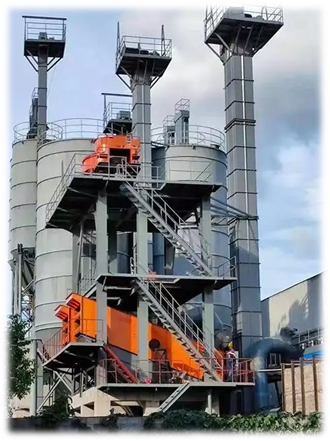
In the modern cement plant, production is a continuous, 24/7 operation. From the quarry to the silo, materials must travel a largely vertical journey. This makes the bucket elevator one of the most critical pieces of handling equipment in the facility. While belt elevators handle fine, free-flowing materials, the toughest jobs—handling raw mix, hot clinker, and abrasive additives—fall to chain bucket elevators. And in these demanding applications, the round link chain is the undisputed workhorse.

However, the round link chain used to haul tons of material up a preheater tower every hour is a far cry from the chains used for lifting cargo or securing loads on a truck. It is a highly specialized wear component, engineered specifically to survive the harshest environment in industrial manufacturing.
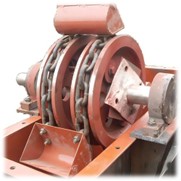
round link chain

The Critical Role of Bucket Elevators in Cement

To understand the demands on the round link chain, one must first understand the process. Bucket elevators are the vertical arteries of the plant. They are essential for:

- Feeding raw materials into grinding mills.

- Lifting raw meal to the top of the preheater tower.

- Transporting hot clinker from the cooler to storage.

- Feeding clinker and gypsum into the final cement mills.

In each of these zones, the bucket elevator chain is subjected to immense tensile loads, constant abrasion from gritty materials, and in the preheater and cooler sections, extreme heat that would destroy a rubber belt instantly.

The Round Link Chain Advantage

Round link chains are favored for these severe duties due to their unique combination of strength and flexibility. The simple, robust design allows the chain to articulate smoothly over chain sprockets while being inherently resistant to jamming from spillage. But for a cement plant, "standard" durability is not enough. This is where specialized metallurgy and heat treatment come into play.

Engineered for Abrasion: The Cement Plant Difference

A common misconception is that any heavy-duty round link chain is suitable for bucket elevator service. In reality, the design priorities are completely different:

1.  Metallurgy vs. Tensile Strength: While lifting chains prioritize maximum tensile strength with minimal weight, cement plant round link chains are formulated from special boron-alloyed steels or CrNiMo alloy steels. The goal is to create a material that responds perfectly to through-hardening, prioritizing surface durability over raw breaking strength.

2.  Surface Hardness is Key: In a 24/7 abrasive environment, the chain's ability to resist wear determines its service life. This is why leading suppliers, such as SCIC (www.scic-chain.com) , utilize advanced heat-treating processes like carburizing. Carburizing diffuses carbon into the surface of the steel link, creating a case-hardened layer that achieves exceptional surface hardness—often in the range of 300 to 450 HB (Brinell Hardness) or higher. This hard outer shell acts as armor against the constant scouring of limestone and clinker dust, while the core of the link retains the toughness needed to absorb shock loads.

chain surface hardness

3.  Wear Allowance Geometry: Unlike a lifting chain, which is discarded when it shows signs of wear, an bucket elevator chain is designed with an engineered wear life. The link geometry allows for a specific amount of "pitch elongation" before the chain requires replacement. The chain eventually fails not by breaking, but when the wear between the links causes it to no longer fit the sprocket correctly.

4.  Precision Fit: To run smoothly at speeds of 1-2 meters per second, the clearance between the links must be precisely controlled. Too tight, and the chain binds; too loose, and the impact accelerates wear. Precision manufacturing ensures a consistent fit for reliable, long-term operation.

For cement plant operators, downtime is the enemy. The choice of a bucket elevator round link chain is a decision for reliability and longevity. By understanding that these chains are not just connectors, but sophisticated wear components requiring specific metallurgy and processes like carburizing, plants can ensure the 24/7 uptime their operations demand.

For more information on high-performance round link chains engineered for the cement industry, visit SCIC at www.scic-chain.com or write to info@scic-chain.com


Post time: Feb-25-2026

Leave Your Message:

Write your message here and send it to us