


Round Link Chains for Slag Removal Conveyors in Thermal Power Plants
Round link chains for slag removal conveyors in thermal power plants represent a highly specialised niche within bulk material handling, yet they operate under arguably the most punishing conditions of any chain application: continuous immersion in water while transporting highly abrasive, high-temperature bottom ash and slag at 7×24 operation.
The Submerged Scraper Conveyor (SSC) System
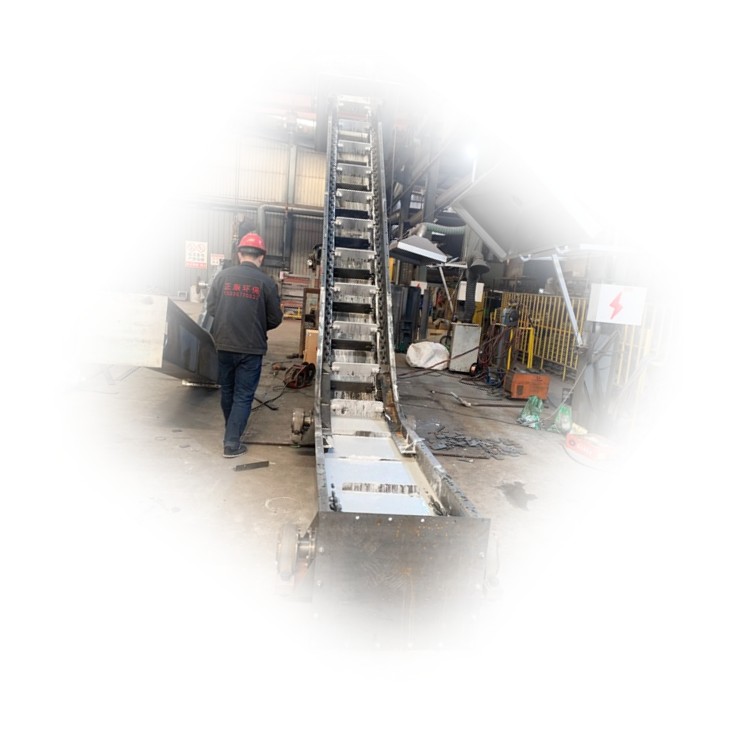
The system, commonly known as a Submerged Scraper Conveyor (SSC), is positioned beneath the boiler and receives hot ash and slag falling from the furnace through a transition chute into a water-filled trough. The water serves a dual purpose: it quenches the material from temperatures that can reach 1200°C, and it suppresses dust and limits thermal stress on downstream components.
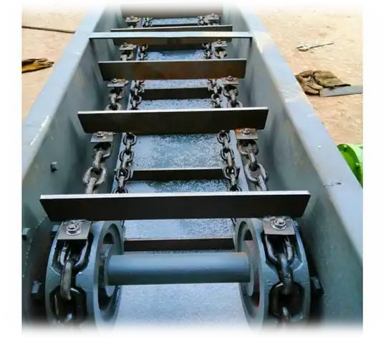
The round link chain — often paired with scraper flights — travels through this water bath, dragging the settled ash along the trough floor to the inclined discharge section. This continuous cycle subjects the chain to simultaneous abrasive wear from the ash, thermal cycling from the quenched slag, and cyclic tensile loading from the scraper resistance.
Two Inseparable Parameters: Surface Hardness and Case Depth
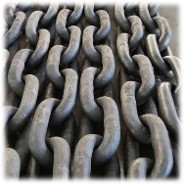
The chain's quality criteria are defined by two inseparable parameters: surface hardness and case depth. The specified target is a surface hardness of 800 HV and a case depth of approximately 10% of the link material diameter. This extreme hardness provides the necessary resistance against the grinding action of bottom ash, while the controlled depth ensures a substantial sacrificial barrier before the tough, ductile core is exposed.
Material selection is the precondition for achieving these properties. The steel must possess sufficient hardenability and core toughness to support a deep, hard case without embrittlement. Industry practice favours CrNi alloy steels or manganese-chrome-nickel alloy steels that can develop a fine-grained, tough core with a minimum surface hardness of 800 HV through case hardening.
Quality Control: Addressing the Critical Failure Modes
Quality control during manufacturing must address several critical failure modes. A documented failure analysis of a round link chain from an ultra-supercritical boiler slag conveyor revealed that the fracture originated from open cracks extending from the outer surface into the interior, which had already existed during manufacturing and were subsequently exacerbated by the carburised layer's stress concentration.
This underscores that pre-hardening surface integrity is as important as the hardening treatment itself.
Inspection should therefore include pre-treatment surface defect detection, verification of material composition, and post-hardening confirmation of both hardness and case depth. Non-destructive testing such as magnetic particle inspection should be applied to detect surface cracks, while microhardness traverses on cross-sectioned specimens verify the 800 HV surface and 10% case depth requirements. The welding area of the round link must also be inspected for slag inclusion, burns, cracks, or depressions that could compromise chain integrity.
Operation Guidance: Three Principles
Operation guidance for SSC chains centres on three principles:
- Tension management is critical: automatic speed control systems that monitor drive chain tension as an indicator of headshaft torque allow the conveyor speed to be varied according to ash loading, maintaining reliable removal capacity under all furnace conditions.
- Water quality must be controlled to prevent scaling and corrosion, as the operating environment contains sulfate content that can accelerate degradation of both the chain and the trough.
- Proactive inspection routines are essential: maintenance teams should routinely check for chain elongation, bent links, and excessive wear on the outer surfaces, as these are the primary indicators of remaining service life.
The self-cleaning mechanism inherent in well-designed SSC chains helps prevent material buildup, but operators should still inspect sprocket alignment and trough integrity at planned intervals to avoid premature failure.
By combining rigorous material and hardening specifications with disciplined operational practices, SSC round link chains can deliver reliable service in one of the most hostile environments in power plant operation.
Typical Chain Sizes and Breaking Strength
Round link chains for Submerged Scraper Conveyor (SSC) systems are specified primarily by bar diameter (d) × pitch (t), with the most common sizes ranging from 19×75 mm to 38×144 mm. The table below consolidates reference data from leading manufacturers including SCIC, RUD, CICSA, and Thiele:
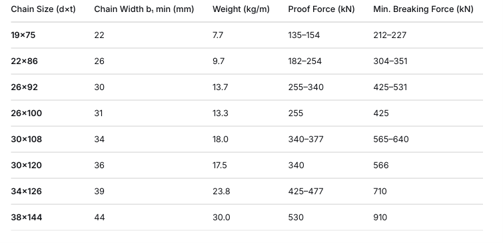
For SSC applications in power plants, the 26×100 mm chain is a particularly common specification. Larger chain sizes such as 30×108 mm and 34×126 mm are specified for higher-capacity systems.
The chain material for SSC applications is typically a CrNi or CrNiMo alloy steel (e.g., 17CrNiMo6 and 18CrNiMo7-6), carburized to achieve a surface hardness of 800 HV or higher with a case depth of approximately 0.09–0.14 × d depending on the specific grade and size. SCIC's SSC chain range demonstrates that case-hardened chains outperform through-hardened chains in wet abrasive ash handling applications, as through-hardened chains sacrifice case depth for strength.
Connectors for SSC Chain Systems
SSC chain systems employ two primary types of connectors: interlink connectors (joining individual chain links or strands) and flight connectors (attaching scraper flights to the chain).
Interlink Connectors — DIN 745 and DIN 5699
The two dominant standards for forged chain connectors are DIN 745 (for bucket elevator chains) and DIN 5699 (for scraper conveyor chains).
Flight Connectors and Jaw Couplings
For SSC systems specifically, flight bars are connected to the chain through jaw-type couplings or plug-in style connectors.
Engineering Considerations for Chain and Connector Selection
Several engineering principles govern the selection of SSC chain sizes and connectors:
- Design Load Criterion: The chain size is selected so that normal operating load does not exceed 1/7 of the chain breaking load. This provides a substantial safety margin against intermittent high pulling loads during start-up and operation through inventoried ash.
- Chain and Connector Matching: Connectors must have proof and breaking forces equal to or exceeding those of the largest chain they are matched with. This ensures the connector does not become the weak point in the system.
- Wear Resistance: Both chain and connectors require case hardening at interlink contact zones. DIN 5699 connectors are specifically edge-hardened in the articulation area to achieve the required wear resistance for SSC service.
- Flight Bar Design: Flight bars are typically designed to drag on the floor and suspend the chains, with sacrificial wear pads (e.g., AR400 steel) on carrying surfaces. These are considered the sacrificial element since they are more easily replaced than the trough floor.
Post time: Oct-29-2026
